


We’re already one month into the new year, and already I’m seeing renewed focus on AI in HR. I posted on my personal blog the trends I’m tracking for the year, but the biggest lesson we need to learn in 2026: Transformation requires more than cool tools.
Follow me on a journey that’s a tale as old as time.
HR launches an exciting AI pilot. Your early champions jump on as part of your push past go-live, inspiring an early ramp of adoption… But then things plateau after just a few weeks--until ultimately it fizzles out with only a fraction of the impact you anchored your business case to. The business declines to invest in Phase 2, pointing to a weak proof of concept, and moves onto more reliable outcomes—like cutting costs and offshoring services.
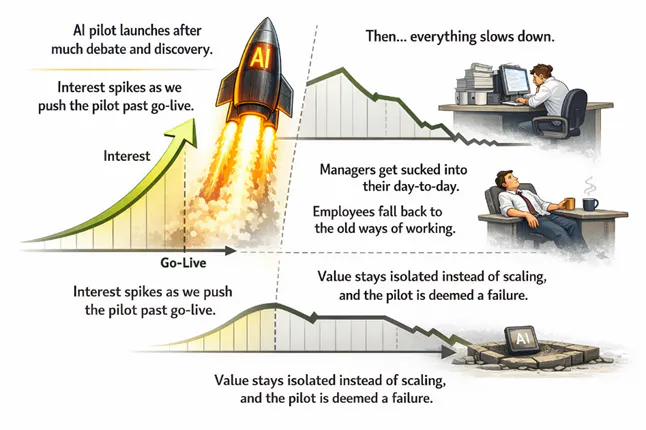
If you’ve been there, you know it’s super disheartening--all of that work, all of those calories, all of that momentum… just swept under the rug. It’s the worst.
It’s one of the biggest reasons we started the Human-Centric AI Council: We know that lasting, meaningful change is one of the pillars of human-centric AI in HR--and that it’s really hard to affect.
So if you’ve been there and felt this (or hesitated because you’re afraid of it), then know this: This isn’t a failure of ambition or technology. It’s a failure of how we approach change.
AI is a completely different kind of technology. It’s changing not just how fast work gets done, but how work gets done--and by whom.
That’s why adoption feels harder than expected: It requires way more change management than a few training videos and an email campaign.
In the HCAIC’s latest change management guide, led by Alicia Miller--Pillar Lead for Change Management--one message is clear:
AI adoption succeeds or fails based on people, trust, learning, and judgment--not deployment checklists.
We’re publishing the ebook later this month, but I wanted to give you a preview, featuring the practices that stood out most.
If you’ve read my blogs here before, you know I get a little long-winded (imagine how precocious I was as an eight-year-old! Lol), so I’ll share some pull-quotes from the eBook first, then offer a deeper dive for my friends with longer attention spans--and/or more interest in the actual best practices we’re purporting in this resource.
The Quick Quotes: AI Change Management in 100 Words or Less:
AI Isn’t Broken—Your Expectations Are. AI is probabilistic, not predictable. Adoption depends on judgment, trust, and learning—not consistent outputs.
Trust Is the Real Output of a Pilot. Pilots test credibility, surfacing human feedback that shapes adoption, risk tolerance, and real-world value.
Experimentation Dies When It Competes With “Real Work”. Without protected time and safety, learning stalls and experimentation becomes optional.
Scripts Don’t Survive Contact With AI. Static training fails. Frameworks and principles help people adapt as tools and outputs change.
Momentum Spreads Sideways, Not Downward. Peer learning and cross-functional networks scale adoption faster than top-down mandates.
Fear Is a Structural Constraint, Not a Communications Gap. Unchecked anxiety suppresses learning; psychological safety enables progress.
The Real Tea: 6 Key Takeaways from the HCAIC’s Forthcoming AI Change Management Ebook
1) AI Isn’t Broken. Your Expectations Are.
One of the most consistent adoption failures comes from treating AI like deterministic technology--stable, predictable, and repeatable. But AI is probabilistic by design. Variability isn’t a flaw; it’s the cost of intelligence.
What differentiates organizations that move forward isn’t better tools--it’s comfort with judgment over certainty. Employees who are trained to evaluate, refine, and contextualize outputs build confidence. Employees who are promised consistency experience variance as failure.
Our AI Momentum Model research reinforces this directly.
Organizations stuck in “Exploring Possibilities” in AI for HR often mistake awareness for readiness, circling AI without developing the evaluative capability needed to move forward.
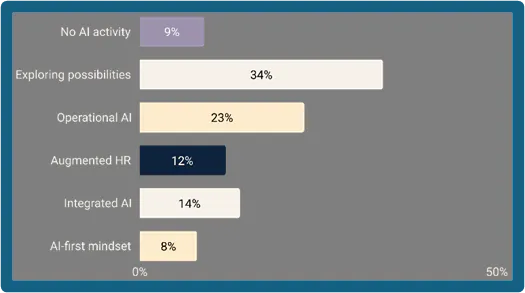
Figure 1. Degrees of organizations use of AI in HR, 2025
Leaders, by contrast, exhibit higher AI literacy and are far more likely to describe themselves as confident practitioners who can enable others.
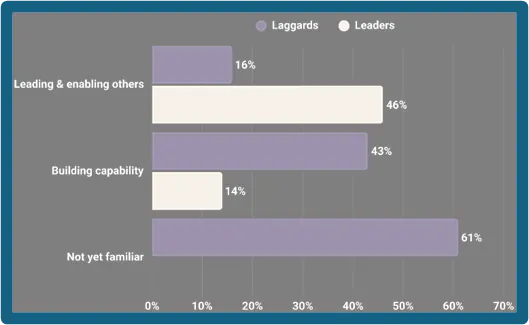
Figure 11. AI and Technology Literacy Across the HR Organization
2) Trust Is the Real Output of a Pilot
Many pilots fail not because the technology underperforms, but because they’re designed to answer the wrong question. Technical feasibility alone doesn’t create momentum. Credibility does.
But what we're observing in our research (five years of trendspotting, btw) leaders who progress beyond pilots treat them as learning and trust-building mechanisms, not proof points. These organizations use pilots to surface adoption barriers, calibrate risk, and build coalitions across HR, IT, compliance, and the business.
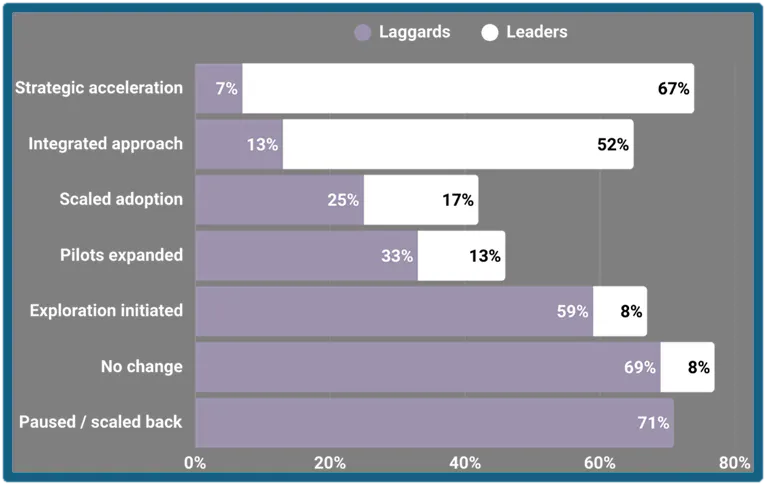
Figure 12. Changes in AI Strategy Over the Past Year
The data is stark: Nearly half of HR teams remain stuck in exploration, but those that advance to integrated or AI-first models consistently outperform laggards on retention, quality of hire, and workforce agility.
Momentum correlates directly with impact, and pilots are the inflection point where trust either compounds or collapses
3) Experimentation Dies When It Competes With “Real Work”
Organizations often say they want experimentation, but leave workloads untouched, timelines unchanged, and failure quietly punished. Employees respond rationally… they deprioritize learning a new approach to the same old work.
The Momentum Model uncovers why this approach matters: HR organizations that remain too conservative when piloting AI lose influence not because they lack ambition, but because exploration without a clear value proposition for end users signals optionality.
The message people hear is, “You should try this” vs. “You can contribute to solution design before we deploy it.”
Leaders who build momentum send a different signal: They protect time, normalize iteration, and make learning visible. Experimentation stops being extracurricular and becomes part of how work gets done.
That cultural permission is a major separator between Leaders and Laggards.
4) Scripts Don’t Survive Contact With AI
The static, step-by-step training we’ve used for decades was designed for stable, static tools. AI breaks that assumption almost immediately.
Interfaces change. Models evolve. Outputs shift.
Our AI Momentum research outlines why organizations stall when they rely on procedural training alone: Capability gaps--especially in literacy (shared above) and integration (shared below)--are among the strongest brakes on momentum.
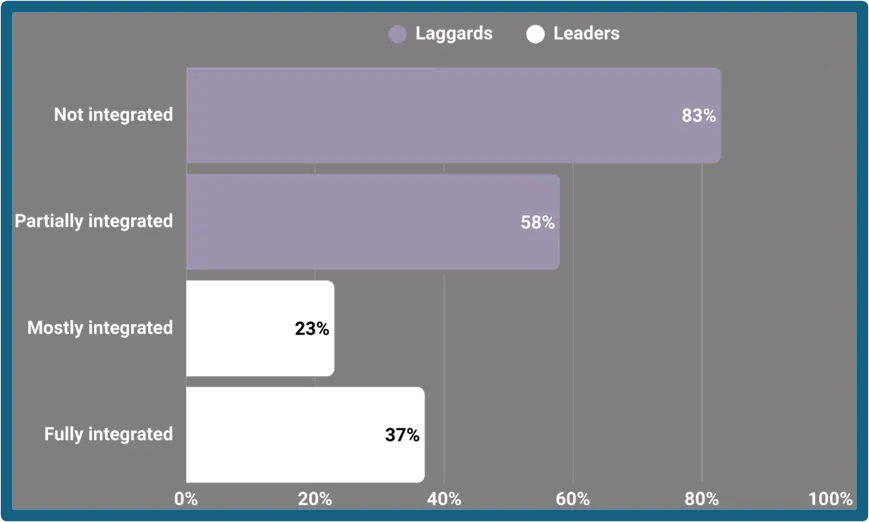
Figure 16. Integration of HR Systems and Data to Support AI
Without shared mental models for how AI should be evaluated and applied, pilots remain isolated and fragile.
Leaders invest instead in frameworks that facilitate action. How to define problems, evaluate output quality, manage risk, and escalate judgment calls--these capabilities are more than a wishlist for HR teams that are getting things done.
This is why literacy emerges as the single strongest unlock in the model. When people understand how to think with AI, adoption scales even as the technology changes.
5) Momentum Spreads Sideways, Not Downward
Some of the most valuable AI learning never comes from formal programs. It comes from peers solving real problems and sharing what worked—or what didn’t work (as expected or at all).
One of the clearest paths to lasting change is also one of the cornerstones of corporate culture: Coalitions.
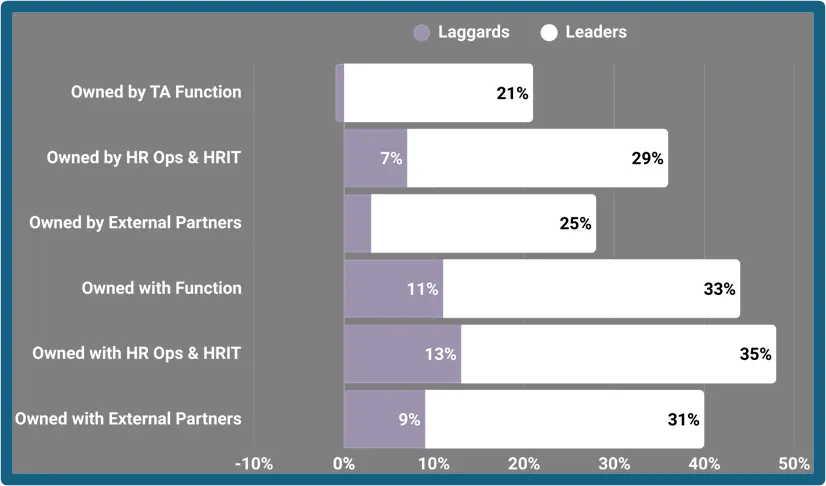
Figure 13. Ownership of AI Strategy for HR and Its Functions
In our research, Leaders don’t keep AI as “HR’s project.” They share ownership across HR, IT, compliance, and business leaders, creating shared accountability and faster diffusion of learning.
Organizations that fail to build these coalitions remain siloed, even when budgets or tools are available. Those that succeed turn individual experimentation into organizational capability — the difference between pilot fatigue and sustainable momentum
6) Fear Is a Structural Constraint, Not a Communications Gap
Job anxiety isn’t a side issue in AI adoption—it’s a central one. When people fear automation, they withhold effort, avoid experimentation, and hoard knowledge.
We see this often: Organizations with low literacy and weak governance default to risk avoidance, scrutinizing AI use cases into oblivion. Fear fills the gap left by understanding.
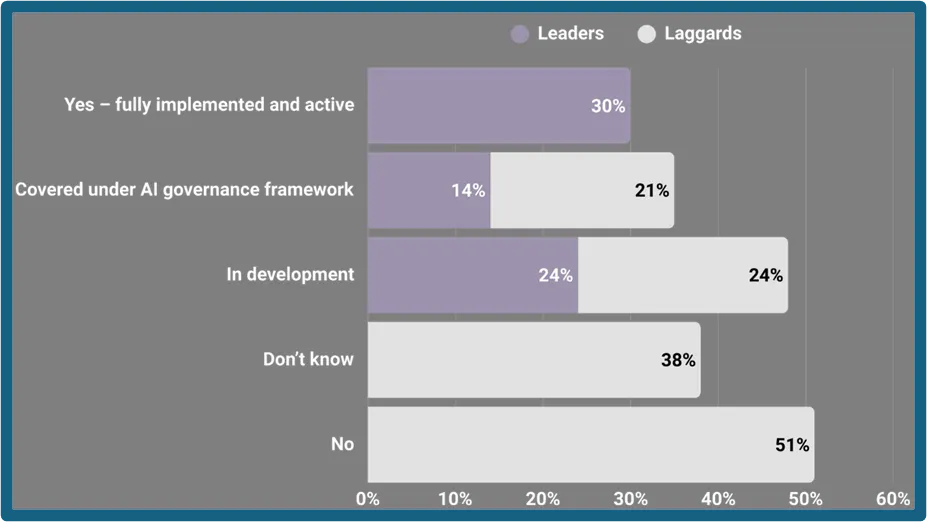
Figure 15. Presence of HR-specific governance to guide the utilization of AI in the organization
Leaders, by contrast, treat governance as a confidence accelerator, not a brake. Clear guardrails reduce uncertainty and give teams permission to move.
The data confirms that organizations with visible governance, higher literacy, and active risk postures move faster—not because they ignore risk, but because they manage it deliberately. Psychological safety becomes an enabler of momentum, not an abstract cultural aspiration.
Reframing Change Management in AI for HR: Maintaining Momentum with Human-Centricity
If there’s a throughline here, it’s this: When AI adoption stalls, it’s usually not because the idea was bad or the team wasn’t capable. It’s because we underestimated how much change we were actually asking people to absorb.
So when pilots fizzle, I don’t see failure. I see organizations trying to force a new kind of work through old muscles.
The teams that are getting traction aren’t louder or faster. They’re more intentional. They spend time upfront resetting expectations. They protect space for experimentation instead of squeezing it between meetings. They put guardrails in place not to slow things down, but so people feel safe enough to actually use the tools. And they talk openly about fear instead of pretending it’s a comms problem.
Momentum doesn’t magically appear after rollout. It’s built (awkwardly, unevenly, over time, etc.) by the choices leaders make about people, not tools.
That’s the real work in front of HR right now—and what we’re supporting at the HCAIC. Be on the lookout for the full ebook next month!