

Your Feed

Adam Weber
Featured Contributor
The path into HR is rarely a straight line. That's a good thing.
I have a sociology degree and a master's in organizational communication. I've been a salesperson, an academic advisor, a pastor, and a traveling musician. I once wrote that I've had more jobs than Forrest Gump. I meant it.
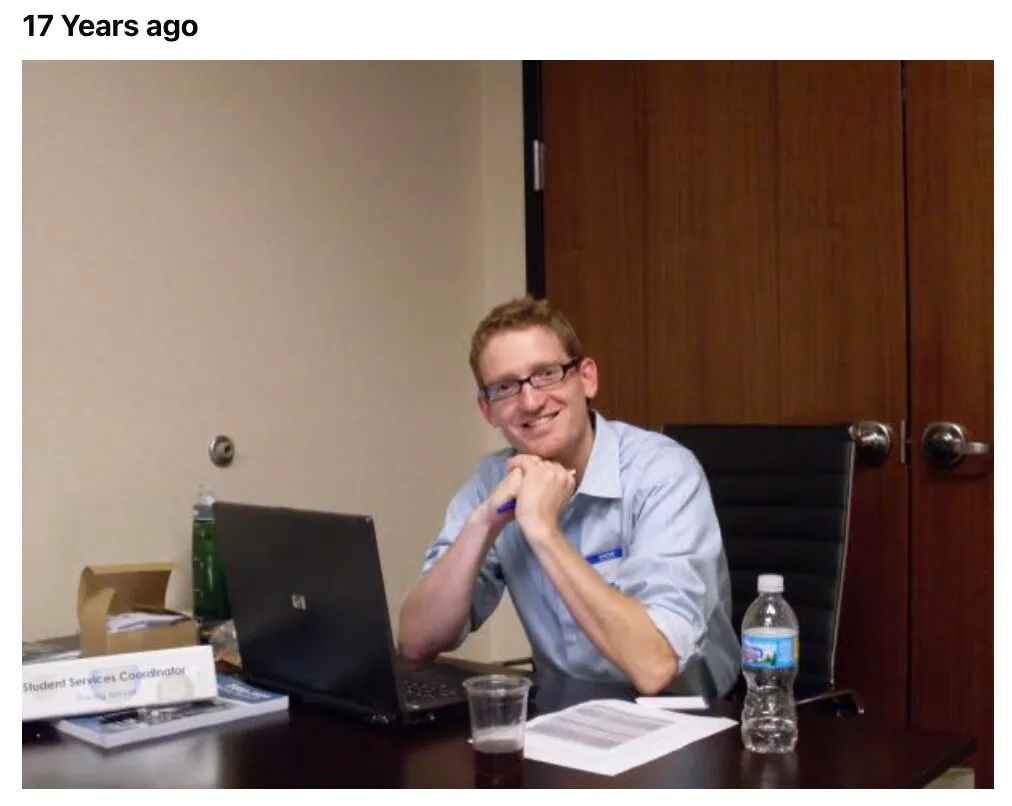
For a long time, I treated that path as something to explain. Today, I see it as the reason I'm good at this work.
I think about this a lot when I coach people leaders.
So many of you came to HR from somewhere else. Psychology. Teaching. Counseling. Operations. A liberal arts degree a relative once asked you to justify over Thanksgiving dinner.
And I've watched plenty of you treat that background as a gap. Something to make up for with another certification.
But what I've seen, over and over, is the background you're tempted to downplay is often where your edge lives.
The former teacher knows how to make a concept stick in a room full of skeptics. The counselor hears what's underneath the conflict. The writer knows the language that will land. The sociology major spots the pattern before anyone else does.
Those are executive skills. Your peers spent years learning finance, sales, or engineering. You spent years learning people.
What did your road into HR teach you that you still use every week?

Brandon Linn
Bobber
OMG young Adam Weber !!!! Look at at that. For me it ALWAYS started with how your employer brand affects your corporate brand and how your customers can easily become your candidates and vice versa. I remember Coca-Cola did a study years ago where they were able to correlate a subpar recruitment process/treatment having negative affect on sales. Not to any astronomical extent, but enough that they could tell there was correlation.
G
G

Zech Dahms
Chapter Leader
Chapter Meetup: Denver
Join the In Good Company Denver Chapter for a relaxed social hour focused on connection, curiosity, and the future of HR in the age of AI.
We’re bringing together Denver-area HR and People professionals for an evening of pizza, drinks, live music, and the conversations many of us are already having behind the scenes: what’s actually working with AI, what isn’t, how the HR function is changing, and how we make sure the human side of work doesn’t get lost along the way.
This is a casual gathering with no presentations and no formal agenda. Just a welcoming space to meet peers, exchange ideas, ask questions, and hear how others are navigating the opportunities and challenges ahead.
What to expect:
Casual networking with HR and People professionals across the Denver area
Conversation around the future of HR and AI
Discussion on what’s working, what isn’t, and where teams are still experimenting
Space to explore how AI can support accessibility and inclusion at work
Pizza, drinks, live music, and plenty of time to connect
Whether you’re already leading AI adoption, just beginning to experiment, or still figuring out where to start, come curious and ready to share.
📍 Brewability
3445 S Broadway
Englewood, CO 80113
🗓️ November 12, 2026
⏰ 5:00 PM – 7:00 PM MT
Please note: RSVP is required to attend this event.

G
G
Introducing performance-linked pay
We're a company of around 150 people across three sites (US, UK and Germany), and we're introducing merit-based pay this cycle. We plan to introduce it at a company-wide town hall, and I'd love your input on how to communicate it.
Context: until now, everyone has received an inflationary increase each year. Over the last year we've introduced a competency framework, performance ratings and consistent development conversations, and now we're connecting them to pay. High performers will clearly benefit, but we expect a large share of colleagues to be rated "meets expectations", and their increase will be close to the old one. For many people the number won't change much, and we don't want to oversell it.
I'd love to hear:
1. Is a town hall the right forum, or did something else work better (team sessions, a video, live Q&A)?
2. What messaging landed well, especially the "what's in it for me" for people in the middle?
3. What would you avoid saying?
4. Any examples or wording you'd be happy to share?
View 2 more replies

Matt McFarlane
Featured Contributor
Ok, yeah, a million thoughts on this one.
For moves like this, honesty is always the best policy. Pay is one of the most emotive topics you'll ever deal with, and people will mistrust vagueness or see through anything that isn't well thought through, like if they don't see the mechanism for assigning performance ratings.
Presumably you're making this move for a reason, likely because you want to increase performance, and so a pay-for-performance process is the path you've chosen.
I'm a big fan of trialling stuff with leaders before you go broad. They will help you soft launch it and might anticipate some of the questions from the broader organisation.
Town halls are a great way to announce something like this, because then everyone is getting the same story at the same time, and you reduce the risk of hearsay or different accounts being heard by different people.
Hopefully this is something that has been alluded to as part of implementing your competency/performance frameworks. You'll need to be prepared to answer the awkward and uncomfortable questions head on, so prep for those. Things like "I used to get this increase guaranteed and now I risk not getting anything?" etc.
Something I'd recommend doing that always lands well when I have launched comp programs is something to the tune of: "We have made this move to help us achieve [goal]. We've built it this way because [reasons]. We know this will not be perfect on the first go. We want your feedback to help us ensure we're doing this the right way longer term."
This tends to a) take the pressure off the people team, because it means there's room to iterate it, and b) invites feedback from others who won't feel like this is being imposed on them and they get no say in it. Some cultures aren't ready for this though so use your best judgement.
Good luck.
Lisa Lie
Featured Contributor
Matt McFarlane really is your guy here.
My advice on what worked/what didn't based on doing this in another role:
Do: Meet with the managers before the townhall to get them across it. You don't want unintentional comms after the announcement like "this is a HR thing/HR decided/it's out of my hands", they need to be super clear on explaining the framework and managing the expectations convos with their teams.
Do say: "Meets expectations is where most people in a healthy team sit"
Don't say: "rewarding our best people" as the other 70% hear "so we're not the best"
Do say: "If you want your pay to move faster, there's now a clear way to do that. Your manager can show you what that looks like across the competency framework and how you can get there".
The big risk is the ratings need to come across as fair. If people don't trust the calibration, there's just no wording that will save it.
G
G
Matt McFarlane
Featured Contributor
Budgeting for the comp cycle belongs with the Head of People, not Finance
Hands down one of the most mis-managed things a business does, is how it budgets for the compensation cycle.
Here's what happens:
It comes up to review season.
No goals get set for the compensation review, simply "we need to do this or people will get upset/we've always done this"
Finance picks a number it can incorporate into forecasting (usually 2-4%)
The People team gets tasked with distributing it across employees.
What ends up happening?
That 2-4% budget ends up being used for:
Market adjustments
Merit increases
Promotions
Corrections that got held over until the comp review because it's "coming up soon anyway, let's just deal with it then"
And year on year, everyone leaves the cycle decidedly unhappy.
Employees feel like it was never enough and don't have any context about the payment
People team try to run a structured process that ultimately gets ignored or overridden
Finance get upset because all this negotiation happens afterwards from unhappy people, which means their budget was pointless anyway.
This is what happens when there is no owner. And guess what?
-> It's the People teams fault.
If this is you — don't wait around — this is 100% one of those beg for forgiveness vs ask for permission types of scenarios. And I assure you, the business will thank you for it later.
I'm not going to spend this post talking about how to budget for the comp review (follow up post if you're interested?), instead the point of this post is that: the People team needs to own the budgeting process for salaries!
It's the biggest cost on any business, and it's being ignored.
Rather than let it be a crappy process year in and year out, take ownership of it. The business will thank you, your people will thank you, and you'll be a commercial leader who takes charge of one of the most critical aspects of the company.
What's stopping you from taking this on?
G
G
Lisa Lie
Featured Contributor
When meetings go pear-shaped...
Meetings. They can really be something to endure or enjoy at work.
I've sat in a lot that have gone pear-shaped, so if you're facing this on the regular, here's some one-liners that make you sound like a leader and not a control freak:
1️⃣ When someone's dominating the conversation:
"Love the energy here, let's make sure we hear from everyone before we lock anything in. [Name], what's your take?"
Crediting the energy will mean it doesn't come across as a shut-down. And then naming someone right after makes it about including the room, not about them talking too much.
2️⃣ When the conversation's going round in circles:
"Feels like we're circling this a bit, what's the decision we need to make together?"
Or you can also try: "There's a lot of different views here. What's the one question we're actually trying to answer?"
3️⃣ When heads are nodding but you can feel it's not real commitment (Brene Brown calls this the 'dirty yes'):
"What's the part of this you're least sure about?"
This asks what's missing/confusing, not who disagrees. It's easier to offer something unsaid than to challenge a pretend yes everyone's already given. Then stop talking and let the silence open things up.
Give these a try and let me know how you go. Skills like this can be so quick and easy to pick up and change your work day.
G
G
Hello
Hello everyone 👋
I'm Tejasvi, an HR and Talent Acquisition professional based in Stockholm. I have 7+ years of experience across Talent Acquisition, HR Operations, Employer Branding and stakeholder management, primarily within the tech and digital space, along with an IT background.
I moved to Sweden a few years ago, and since then I’ve gained local experience with Dynamx and Schneider Electric, working with Nordic teams across Talent Acquisition, employer branding and recruitment initiatives.
Moving to Sweden has also been a learning experience for me — understanding a new work culture, building connections and finding my place in the Swedish job market.
I’m learning Swedish as well and would love to connect with others in the HR/People community, exchange experiences, learn from each other and explore new ideas around the future of HR.
Looking forward to getting to know you all — and always happy to connect over a fika! ☕😊
View 4 more replies

Welcome, Tejasvi Gupta. Starting over professionally in a new country takes real nerve, and doing it while learning the language adds a whole extra layer. I've had the pleasure of working with Nordic teams on past projects. What has surprised you most about working with them? Looking forward to learning more from you.
Shera
Jaya Dubey
Chapter Leader
Welcome Tejasvi Gupta great to have you in IGC, I am leading Stockholm chapter you can join the local chapter and can enjoy the learning resources as well 😃
G
G
In Good Company is HiBob’s global community for HR leaders, People teams, and business managers. It’s a space to ask questions, share experiences, and learn from peers navigating the challenges of modern people management.
The community brings together professionals from growing and mid-sized companies to discuss topics such as performance management, payroll and compensation, employee engagement, compliance, workforce planning, learning and development, and HR analytics.
Through open discussions and shared best practices, In Good Company helps HR teams learn from real-world experience and make more confident people decisions.
What HR leaders discuss in the HiBob Community
The HiBob Community brings together HR leaders and People teams from around the world to share insights on managing people in growing and mid-sized organizations.
Conversations span every stage of the employee journey — from building strong culture and belonging, navigating change in HR Operations, and supporting leaders through the talent strategy, to practical discussions on HR excellence, hiring, onboarding, and employee growth.
In addition to open discussions, the community includes curated resources such as FAQs, how-to guidance, and best practices based on recurring HR challenges. If you’re new here, you can learn more about In Good Company and how the community works, or jump into the topics that matter most to you.