Most leadership models/frameworks fail – not because they’re not right for the company – but because they never make it off the slides.
I’ve seen it happen too many times, and I imagine you have too. Months of thoughtful design meetings, a polished slide deck (TBH probably version 36.5), a big internal launch… and then, crickets. Very little actually changes. And we wonder why it doesn’t stick.
When we built and launched Leadership CODE at HiBob – our compass for exceptional leadership – we wanted to make sure we didn’t fall into that trap.
Our goal wasn’t to introduce a new model. It was to bring it to life. That means helping every leader connect to it personally and collectively, and build the confidence to live our CODE habits IRL (see my previous post for the habits!)
So instead of a typical announcement, we ran a global activation — over 20 workshops, reaching 300+ leaders across every level, from Team Leads to our C-level.
Here’s what made the difference 👇
Senior Sponsorship from the Start: Every CODE workshop was co-facilitated by a C-level or VP, alongside a People & Culture Partner and a Talent & Learning facilitator. That sent a powerful signal that CODE isn’t a HR initiative — it’s our shared compass. We even provided senior leaders with Leadership CODE soundbites — sticky phrases for culturally important moments like team meetings, 1:1s, hallway chats, and more
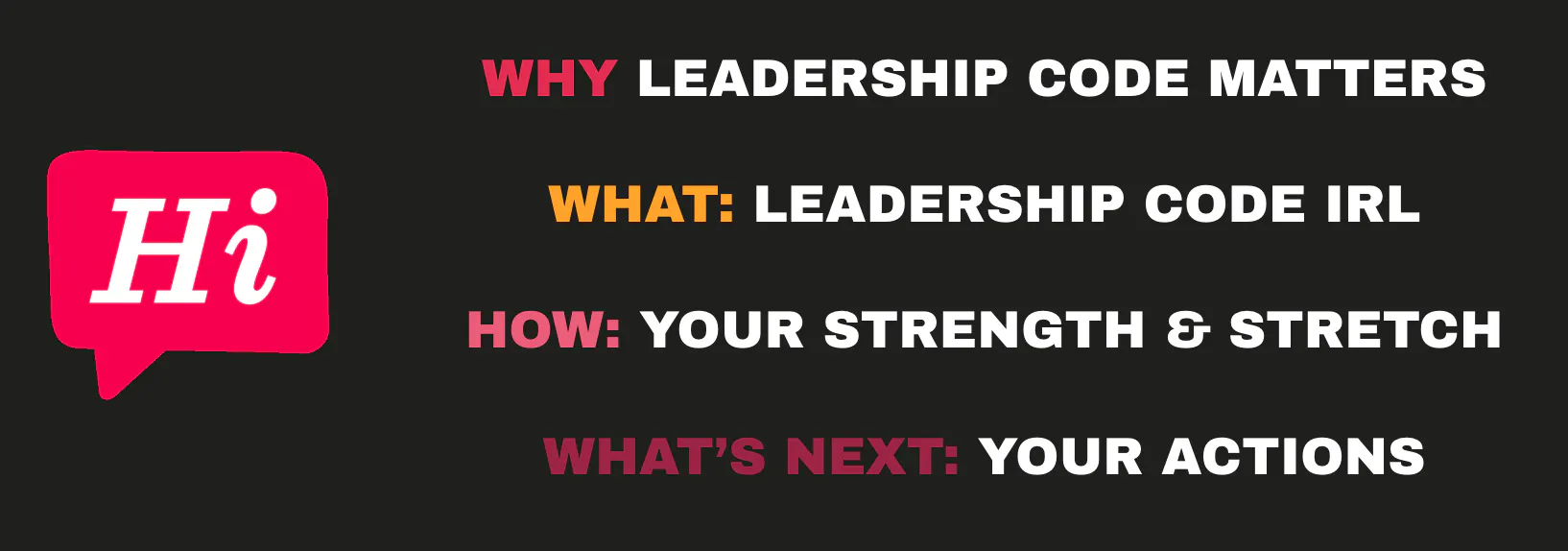
Practical & Engaging Workshops: Each workshop followed a simple flow:
💡 Why CODE matters — what’s in it for you and for HiBob
🎯 What CODE looks like in real life — stories of leadership in action
🧭 How to grow — self-assessing strengths and stretches, using CODE cards (more on this below)
🚀 What’s next — how we’re making it stickEvery workshop was also a listening opportunity — helping us learn what’s resonating or not with our leaders, and how we can better support them
Synced with Performance & Development: We intentionally timed the launch of CODE to take place 3 months before HiGrowth, our people process for Bobbers and leaders to review performance and development at HiBob. This was another critical activation point – leaders self-reflected and received feedback from their manager/others on how they’re living our Leadership CODE. This meant that early on, CODE was embedded into how we talk about performance and development, and not a separate concept.
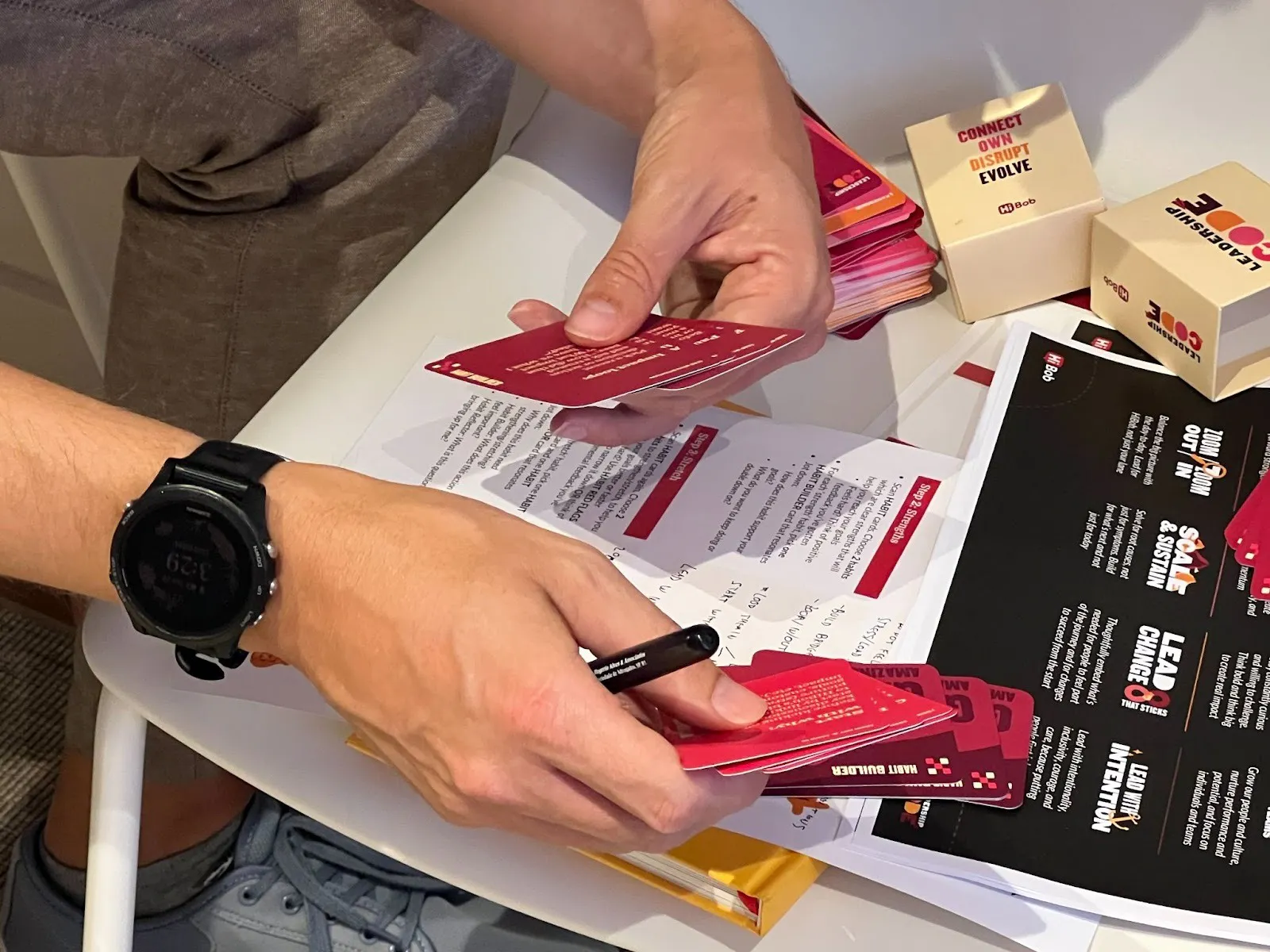
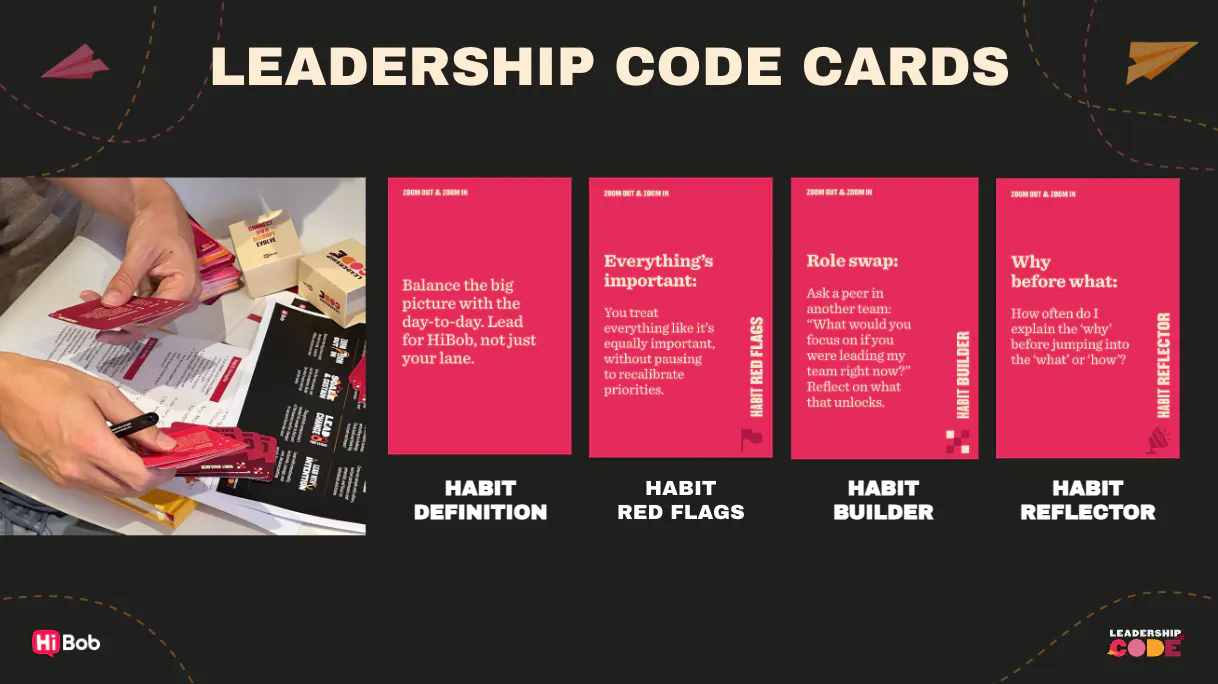
Getting Creative with CODE Cards: To reinforce learning, we even designed Leadership CODE Cards. Each deck had four categories of cards: Habit Definitions, Habit Red Flags, Habit Reflectors (thought-provoking questions), and Habit Builders (microtips and hacks). We used these cards during the activation workshops, and gave them to every leader as a tool for self-reflection and team reflection.
So after all that, what was the early feedback?
“The Leadership CODE workshop was a massive hit! The energy was incredible, everyone leaned in, embraced the CODE, and kept using it throughout.”
“It didn’t feel like two hours, it just flew by - so much rich conversation in the room.”
“Thank you again for last week’s workshop on CODE habits. This was incredibly useful. I don’t remember a workshop I’ve learnt so much from in such a short time .”
“We’re already using the CODE cards to help leaders think about how they can tackle everyday leadership situations differently.”
“Straight away we've incorporated much of the Leadership CODE with how we work with each other and our teams. Really clear takeaways on areas of improvement for myself and how I show up with my team.”
“I’ve seen leadership models before and this really is the next level.”
The biggest lesson for us?
Don’t launch a leadership model — activate it.
Let people see it, feel it, and make it theirs.
For those of you leading similar work:
How have you helped leadership model come alive in your organizations?
What’s worked — and what would you do differently next time?
➡️ Next up in this series: Stage 3 — Make It Stick. I’ll share how we’re embedding CODE into our leadership journeys, talent practices, even AI Coaches — and how we know it’s working.