


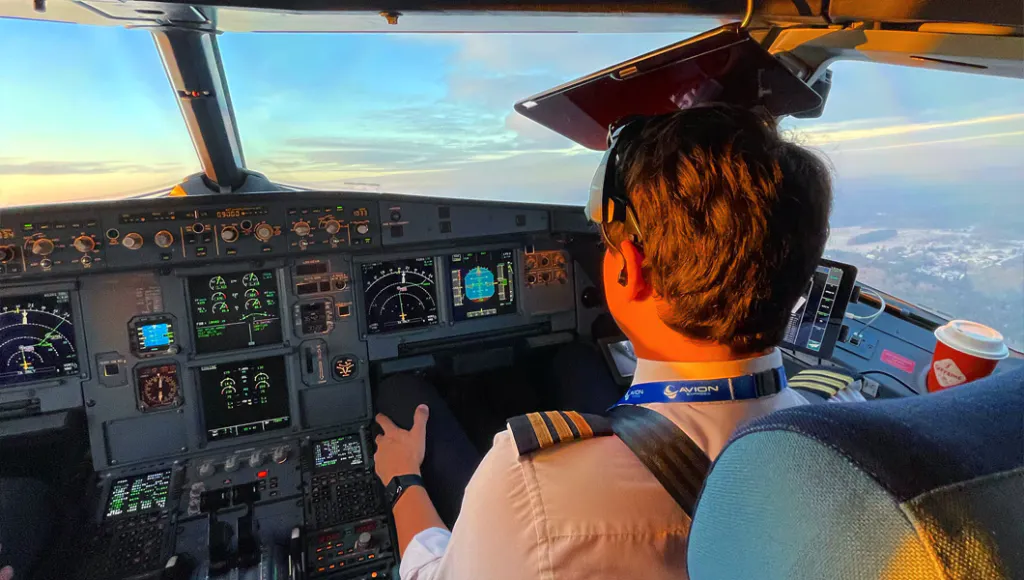
Altitude = safety.
The higher up you are, the more time you have to problem-solve, and the more landing-site options you have available if something goes wrong.
Planes are built to glide. So when you're at 30,000 feet, you have options. A jetliner can glide about 100 miles if its engines fail at that altitude.
You don't have nearly as many when you're flying low.
I think about this in the context of the HR execs I coach.
It's not uncommon for them to get yanked from high altitude to low altitude in a single morning.
A call about a surprising employee issue comes in four minutes before the leadership meeting starts.
And now you're supposed to walk in and talk strategy.
Long-term horizon.
Big picture.
Here's the small ritual I give them: before you walk into the room, take one breath and say one word to yourself.
"Altitude."
That's it.
No 5-step framework. Just a quiet reminder of the perspective you're choosing to bring in.
Because at high altitude, you have options.
At low altitude, you can only react.
What's your version of "altitude?" How do you maintain a 30,000-foot view even in the midst of solving ground-level problems?