

Your Feed

How are you measuring whether AI is actually creating value at work?
In our conversation, Stop Chasing AI ROI: Start Measuring Business Impact, Dr. Kenneth Matos challenges a familiar trap: adoption, license counts, and even hours saved do not automatically equal business impact.
A useful question is: what changed downstream?
Did AI help your team reduce rework, move decisions faster, improve quality, free capacity for higher-value work, or unlock growth? And importantly, do you have a way to connect that change back to a real business outcome?
For HR, this is not about using AI to cut people costs. It is about understanding where people, skills, and AI capacity can work together to create more value.
We’d love to hear from you: what is the biggest barrier to proving AI’s impact in your organization? Sound off in the comments on your experience with today's webinar and any new learnings.
G
G
🏁 A very special last minute invitation for our HiBob community!
We have a few places available to join us at Goodwood Revival this Friday, 18 September, with guests hosted in the premium Salvadori Pavilions.
🥂 Your hospitality experience includes:
✨ Early access to the event and hospitality suite
🏎️ Balcony views overlooking the famous Goodwood Chicane
🌿 Private garden with trackside views
🏁 Access to the paddock
🥐 Breakfast on arrival
🍽️ Four course lunch
🫖 Afternoon tea
🥂 Free flowing Veuve Clicquot Champagne, wine, beer and soft drinks
🎧 Race programme, race card and radio earpiece
It promises to be an incredible day of historic motorsport, great food and brilliant company in one of Goodwood’s premium hospitality settings.
If you’re based in the area, are free this Friday and would like to join us, please email me directly to secure a place ([email protected])
We only have limited places available and they’ll be allocated on a first come, first served basis, so be quick! 🏁🥂
G
G
🏁 A very special last minute invitation for our HiBob community!
We have a few places available to join us at Goodwood Revival this Friday, 18 September, with guests hosted in the premium Salvadori Pavilions.
🥂 Your hospitality experience includes:
✨ Early access to the event and hospitality suite
🏎️ Balcony views overlooking the famous Goodwood Chicane
🌿 Private garden with trackside views
🏁 Access to the paddock
🥐 Breakfast on arrival
🍽️ Four course lunch
🫖 Afternoon tea
🥂 Free flowing Veuve Clicquot Champagne, wine, beer and soft drinks
🎧 Race programme, race card and radio earpiece
It promises to be an incredible day of historic motorsport, great food and brilliant company in one of Goodwood’s premium hospitality settings.
If you’re based in the area, are free this Friday and would like to join us, please email me directly to secure a place ([email protected])
We only have limited places available and they’ll be allocated on a first come, first served basis, so be quick! 🏁🥂
G
G

Lisa Lie
Featured Contributor
Are you prioritising people skills?
ICYMI - Ernst & Young is paying bonuses for people skills. Think leadership, judgement and collaboration.
Not too long ago (i.e. last year) organisations were giving out bonuses for AI adoption but it looks like we're coming full circle on this one.
People skills are learnable, it's not a 'you have them or you don't' situation. But they need to be taught by experts with lived experience (not AI).
Interested to hear how the community is approaching the balance of AI and People skills, what they're seeing as a priority and how they're developing these skills in time-poor teams.
Link to article here: https://www.cbsnews.com/news/ernst-young-human-focused-skills/
G
G

Natalie Neilson
Chapter Leader
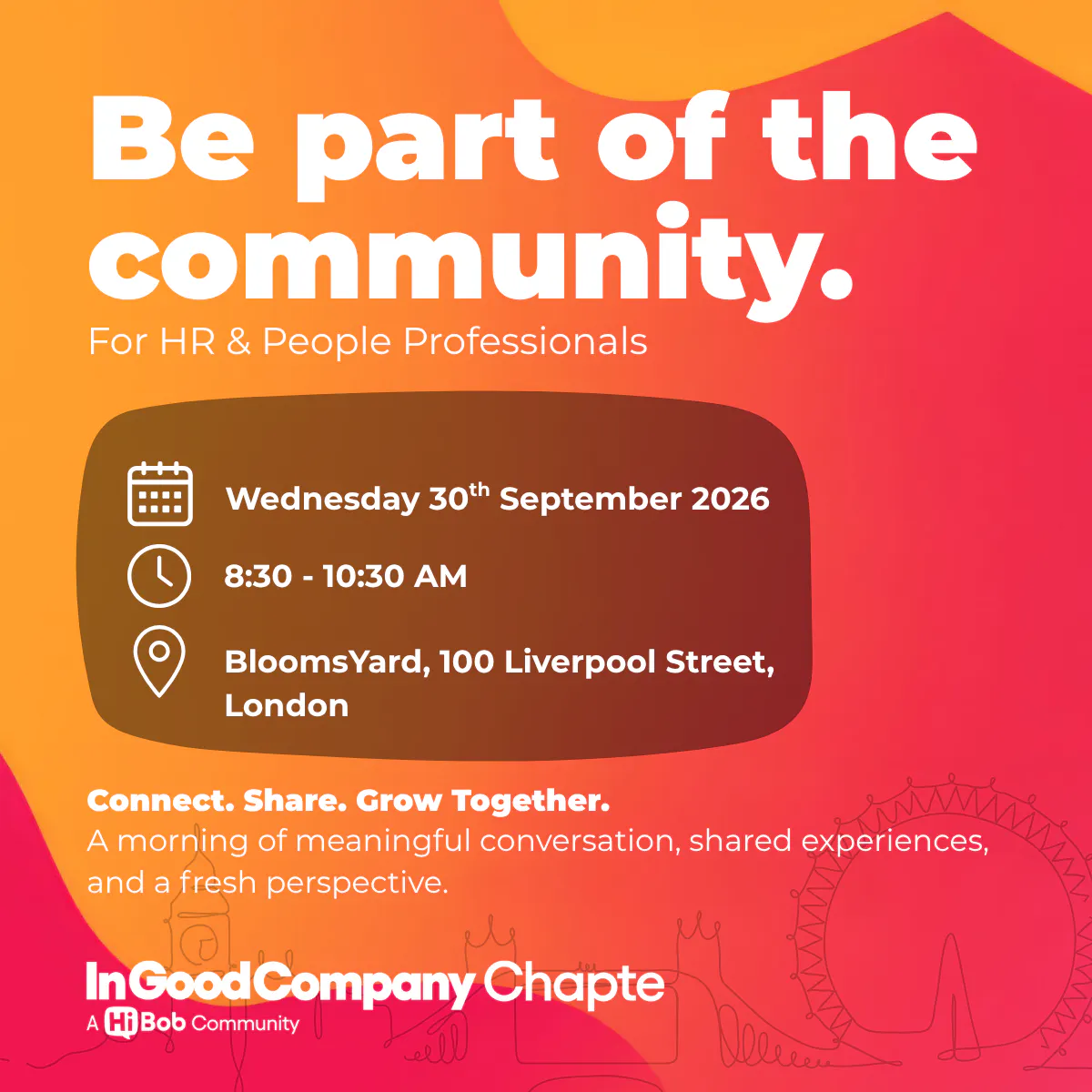
We're back! Join us on 30th September
We’re back! 😁 After our first community event earlier this summer, our second Chapter event is returning to London later this month.
We’re creating space for meaningful conversation, shared experiences, and something a little different.
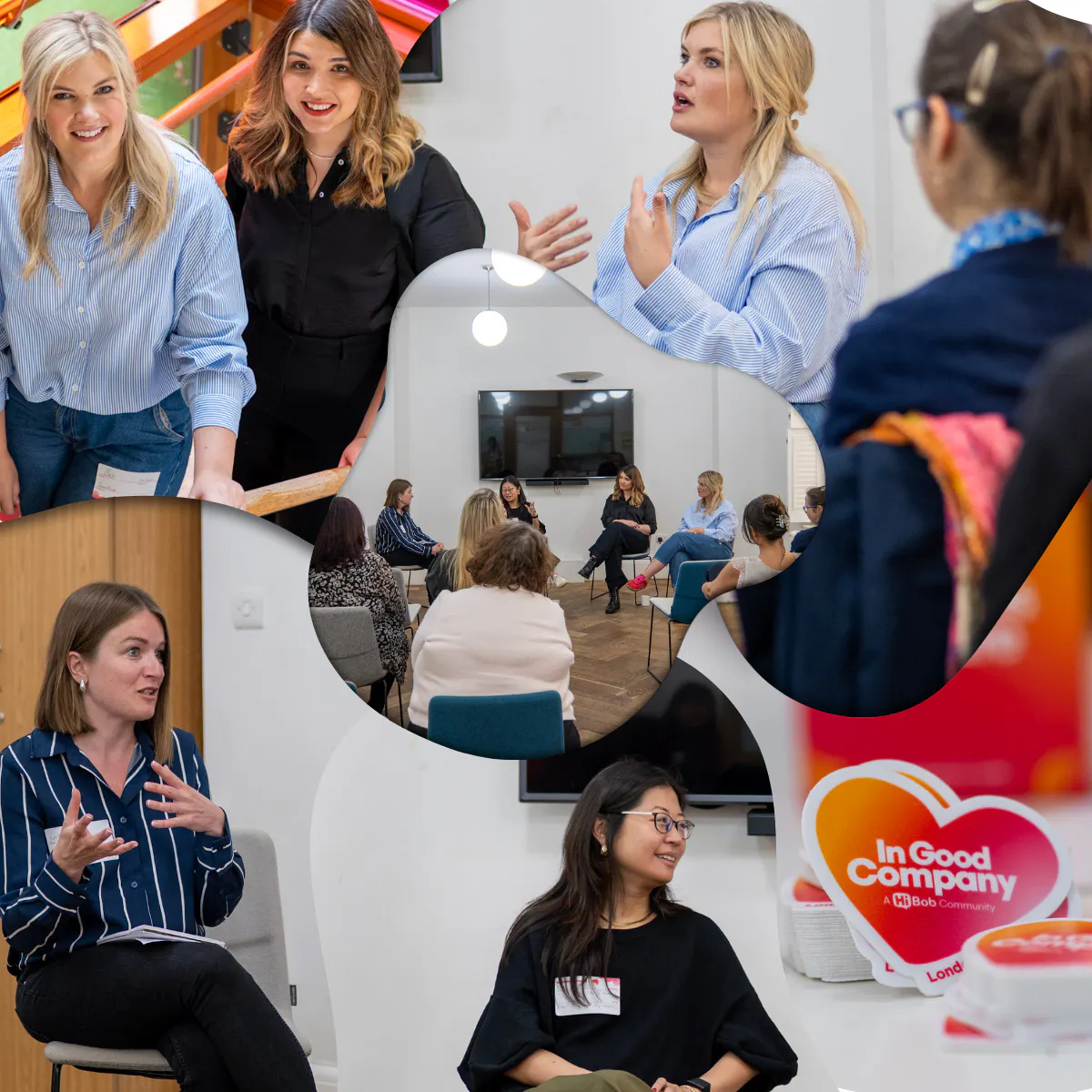
Expect an interactive morning, facilitated conversations, and plenty of time to connect with other HR & People professionals. Whether you joined us for our first event or this will be your first time, Christiane Wong and I would love to have you in the room. 😊
📍 @bloomsyard 100 Liverpool Street, London
🗓️ Wednesday, 30 September
⏰ 8:30 - 10:30 AM
For more details or to RSVP, sign up here: https://community.hibob.com/chapter-meetups/~event/post-slug-wRNXHu4rndlhnXI
G
G

Our First IGC Live gathering in Copenhagen. Tomorrow!
We’re getting ready for our first In Good Company Live gathering in Copenhagen, and we’re really looking forward to having HR & People leaders together in the same room.
We’ll be talking about what’s actually changing at work as AI becomes part of our everyday lives, not just the technology, but the people side of it.
What are employees experiencing? What are managers figuring out? And what is HR still trying to solve?
No need to have all the answers. In fact, the things we’re still figuring out are often the most interesting to talk about.
Then we’ll slow things down with drinks, bites, and plenty of time to meet and mingle with fellow HR people.
📅 Tomorrow, 16 September | 16:30–19:30
📍 BaneGaarden, Copenhagen
Coming from HR Træfpunkt? We’re just around the corner, so come continue the evening with us. Not attending HR Træfpunkt? You’re just as welcome.
And if you haven’t signed up yet, there’s still time: RSVP here
👇 Before tomorrow, we’re curious: What’s one thing about AI and the future of work that you’d genuinely like to hear other HR leaders’ views on?
Drop it below — we might just bring it into the room tomorrow.

amazing venue and some very interesting research from our Insights LAB to be shared during a great evening of drinks, networking and insights.
G
G
In Good Company is HiBob’s global community for HR leaders, People teams, and business managers. It’s a space to ask questions, share experiences, and learn from peers navigating the challenges of modern people management.
The community brings together professionals from growing and mid-sized companies to discuss topics such as performance management, payroll and compensation, employee engagement, compliance, workforce planning, learning and development, and HR analytics.
Through open discussions and shared best practices, In Good Company helps HR teams learn from real-world experience and make more confident people decisions.
What HR leaders discuss in the HiBob Community
The HiBob Community brings together HR leaders and People teams from around the world to share insights on managing people in growing and mid-sized organizations.
Conversations span every stage of the employee journey — from building strong culture and belonging, navigating change in HR Operations, and supporting leaders through the talent strategy, to practical discussions on HR excellence, hiring, onboarding, and employee growth.
In addition to open discussions, the community includes curated resources such as FAQs, how-to guidance, and best practices based on recurring HR challenges. If you’re new here, you can learn more about In Good Company and how the community works, or jump into the topics that matter most to you.